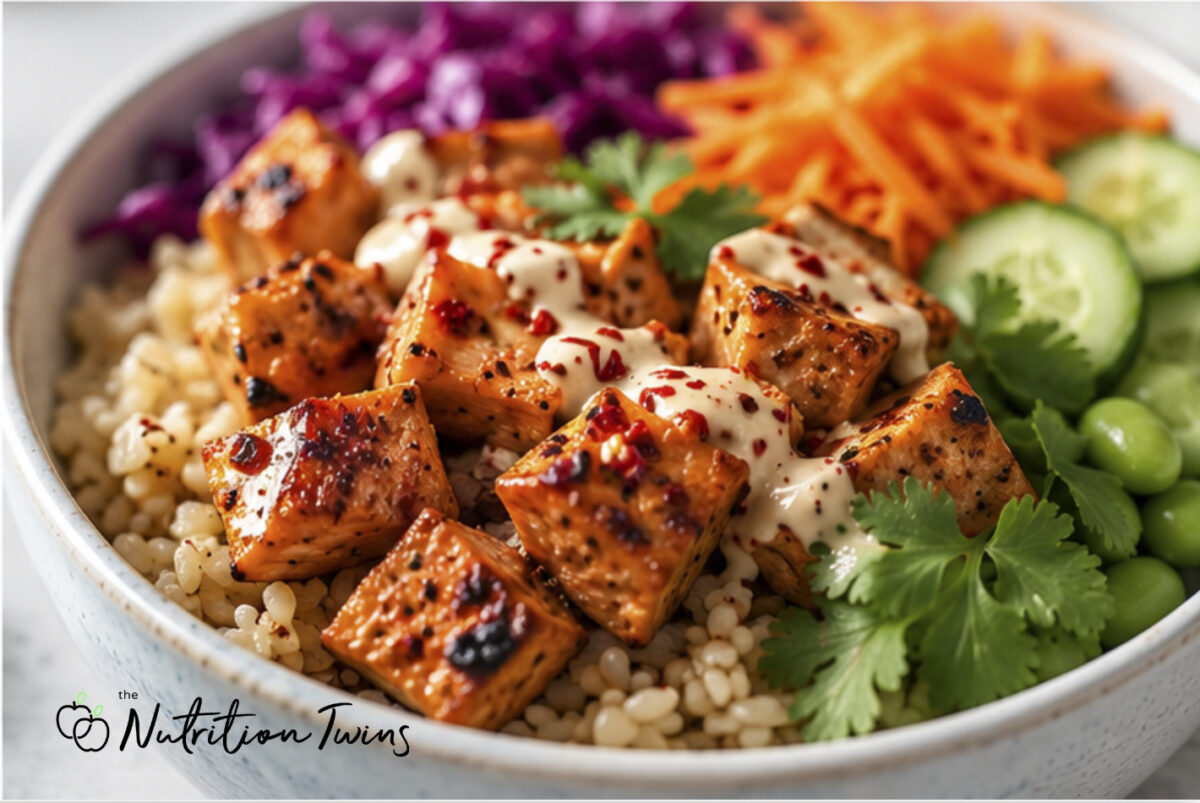
A simple, satisfying, high-protein bowl with sesame-glazed salmon, crisp veggies, edamame, brown rice, and a creamy, spicy tahini-yogurt sauce.
If you love the flavors of a sushi bowl, this one’s about to go on repeat. It’s built to hit 30+ grams of protein in about 350 calories — right at the protein target we coach clients toward per meal, with 20g as more of a bare minimum. In fact, that’s a fraction of the calories you might expect, plus fiber and colorful vegetables, all in about 30 minutes.
As registered dietitians who’ve spent 20 years helping people lose weight and keep it off, we know what separates people who stay on track from people who don’t. It’s having a short list of easy, satisfying weeknight go-tos they can make without thinking.
This bowl is one of ours. Plus, it’s flexible, it reheats well, and it hits the protein and fiber targets that actually make a meal filling.
Why we love this recipe
High in protein
Salmon, edamame, and Greek yogurt all bring meaningful protein to this bowl. Greek yogurt delivers protein with almost no fat, so it’s doing a lot of the work here — that’s how this bowl hits 30 grams of protein while staying light. Overall, getting 30+ grams of protein at a meal is one of the most reliable ways to feel full and stick with your goals.
High in fiber (and fighting inflammation)
Brown rice, edamame, carrots, cucumber, and cabbage all contribute fiber, which slows digestion and helps you feel fuller for longer. You don’t need to eat less food to eat fewer calories overall. Instead, filling your bowl with fiber-rich vegetables adds volume and staying power without piling on calories.
Several of these foods are also heavy hitters for fighting inflammation. Purple cabbage, for example, is part of the cruciferous vegetable family (alongside broccoli, cauliflower, and Brussels sprouts), which contains compounds that support healthy estrogen metabolism. That’s especially helpful for our perimenopause and menopause clients, since shifting estrogen levels during this stage can influence everything from weight to mood to inflammation.
Blood-sugar friendly
We’re not afraid of carbs — in fact, small portions of wholesome ones like these prevent cravings and quick pick-me-ups later, since wholesome carbs provide longer-lasting energy than refined ones. We just like to pair them with protein, fiber, and healthy fat, the way this bowl does. As a result, pairing brown rice with salmon, edamame, and vegetables blunts the blood sugar swing you’d get from a bowl of rice alone.
Rich in omega-3 fats
Salmon is one of our favorite ways to get EPA and DHA, the omega-3s linked to cardiovascular benefits. It isn’t a “low-fat” food, and it doesn’t need to be — most of the fat it provides is the kind we’re glad to include, and it keeps the meal feeling rich and satisfying without needing to add much more fat elsewhere.
The protein–blood sugar connection (and why it matters more as we age)
Here’s a connection we talk about with clients constantly, especially women navigating perimenopause and menopause: protein is one of the most direct levers you have over blood sugar stability.
When a meal is mostly refined carbs with little protein, blood sugar rises quickly and then drops just as fast. As a result, that crash doesn’t just leave you tired — it also triggers a cortisol response.
Cortisol spikes are linked to increased cravings, a tendency to store fat (particularly around the midsection), and low-grade inflammation. It’s a cycle: blood sugar dips, cortisol rises, cravings hit, you reach for something quick, and the cycle repeats a few hours later.
Building a meal around 30+ grams of protein, like this bowl does, slows digestion and blunts that swing. Steadier blood sugar means steadier energy, fewer cravings, and less of the cortisol-driven fat storage that tends to show up with chronic dips and spikes.
Protein does double duty here, too: it’s what your muscles need to repair and rebuild after a workout. So if you’re strength training at the gym, or just trying to preserve the muscle mass that naturally declines with age, a protein-forward meal like this one supports that work instead of undoing it.
Prep Time: 10 minutes | Cook Time: 12 minutes | Total Time: about 22 minutes
Ingredients
For the salmon
- 12 ounces salmon (wild-caught, if available), skin removed, cut into cubes
- 1 teaspoon smoked paprika
- ½ teaspoon honey
- 4 teaspoons low-sodium tamari
- 2 teaspoons Dijon mustard
- ¼ teaspoon kosher salt
For the creamy spicy sauce
- 1⅓ cups plain nonfat Greek yogurt
- ½ teaspoon tahini
- Juice of ½ lemon
- Sriracha, to taste
- 1-2 tablespoons water, as needed
For the bowls
- 2 cups cooked brown rice (½ cup per serving)
- 1 cup sliced cucumber
- 1 cup shredded carrots
- ½ cup shelled edamame
- 1 cup shredded purple cabbage
- 2 scallions, thinly sliced
- Sesame seeds, for garnish (optional)
- Fresh cilantro, for serving
How to make it
Nutrition Twins tips
- Short on time? Use leftover rice or a microwaveable brown rice packet.
- Not a fan of heat? Start with a small amount of Sriracha, or skip it and add extra lemon.
- No cabbage on hand? It’s still delicious with just cucumber, carrots, and edamame.
- Meal prepping? Keep the sauce separate until serving so the bowl stays fresh.
- Want more savory depth? Add ½ teaspoon toasted sesame oil to the marinade — it adds about 10 calories per serving.
- Watching sodium? The tamari already brings salt to the dish, so the kosher salt here is intentionally light — no need to add more.
Nutrition information (per serving, serves 4)
Nutrient
Amount
Calories
~350
Protein
~33g
Fat
~8g
Carbohydrates
~35g
Fiber
~4g
Sodium
~580mg
Values are estimates calculated from standard USDA nutrient data, using wild-caught salmon. Farmed Atlantic salmon runs noticeably higher in fat (closer to 13g fat per 3oz vs. 6g for wild), so if you’re using farmed, expect calories and fat to land higher than listed here.
FAQ
Is salmon good for weight loss?
Yes — salmon is a high-protein, low-carb food that supports satiety and, additionally, provides omega-3 fats linked to metabolic and cardiovascular health, making it a smart anchor for a weight-loss-friendly meal.
Why is protein important for blood sugar?
Protein slows digestion and the absorption of carbohydrates, which blunts blood sugar spikes and the crash that follows. Steadier blood sugar means fewer cravings and less cortisol-driven fat storage.
How much protein do I need per meal?
We generally recommend aiming for about 30 grams of protein per meal, with 20 grams as more of a bare minimum, to support satiety and muscle maintenance — more if you’re strength training or over 40, when muscle preservation becomes more of a priority.
A recipe like this is one piece of a sustainable weight-loss routine — but it’s not the whole picture. Our free guide, [11 Sneaky Things Sabotaging Your Weight Loss], covers the everyday habits that might be working against you elsewhere. And if you want hands-on help building that full picture — including for perimenopause and menopause — [our 1:1 coaching]] might be the right next step.
About the Experts
Tammy Lakatos Shames, RDN, CDN, CFT and Lyssie Lakatos, RDN, CDN, CFT are The Nutrition Twins, registered dietitian nutritionists and certified fitness trainers and nationally recognized nutrition experts with over 15 years of experience. They are the authors of Fire Up Your Metabolism, The Secret to Skinny and The Nutrition Twins’ Veggie Cure and have been featured in major media outlets including Good Morning America Health, Fox & Friends and CNN. The Nutrition Twins specialize in evidence-based nutrition advice for weight loss, disease prevention, and optimal health.