
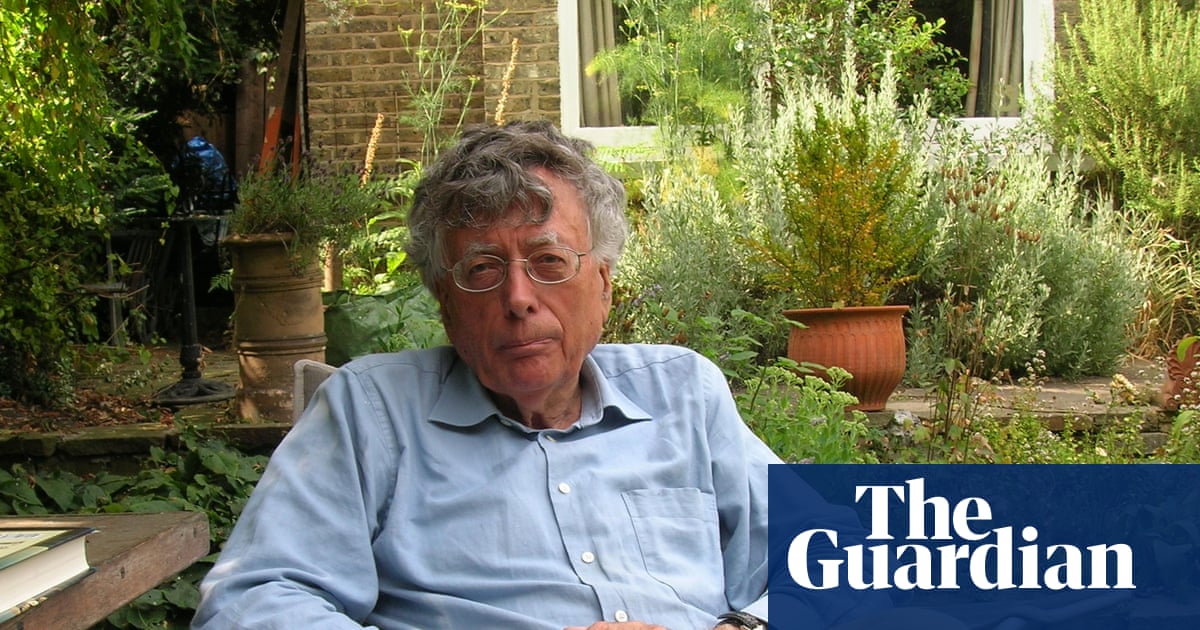
In 1956 a letter arrived for George Brown. The Social Psychiatry Research Unit in Camberwell, south London, needed an anthropology graduate and Brown had been recommended by a former tutor. Since graduating two years before, he had had only numbing jobs including supervising time and motion studies, and he leaped at the chance.
Brown, who has died aged 95, went on to have a six-decade academic career, becoming a pre-eminent medical sociologist, definitively establishing the importance of social and environmental factors in mental illness.
With the arrival of antipsychotic drugs in the 1950s, psychiatry was preoccupied with chemical imbalances that could be corrected with medication, but the Social Psychiatry Research Unit, set up in 1948, wanted to study mental illness through a broader lens. A third of mental patients admitted to the Maudsley hospital in south London had schizophrenia and the unit was researching how patients and families coped when they left hospital.
Brown was intrigued that patients discharged to live with their parents and families had to be readmitted to hospital more often compared to those discharged to hostels or to live with people who were not family. He wanted to know why.
In a pre-computer age, the research was painstaking work, with years of interviewing and analysing data. Brown found that mental illness has stigma attached and close family members were often ashamed of their relative with schizophrenia or found it difficult to cope, which adversely affected the patient, meaning they were more likely to relapse.
He introduced the term “expressed emotion” (EE), which is a measure of the emotional atmosphere within a family or household. If there was high EE, by which he meant people were cold, critical and hostile to the person with schizophrenia, a relapse was more likely.
Through his research, Brown was establishing the field of social psychiatry, showing that the behaviour of everyone connected to a person with mental illness can have a bearing on the condition.
Interviewing techniques and asking the right questions were crucial to this work, and in 1966 Brown and the psychiatrist Michael Rutter developed the Camberwell Family Interview to measure different types of EE and study family life dynamics. Colleagues remarked that Brown was a skilled and empathetic interviewer, quick to make a rapport with interviewees, and able to strike a balance between allowing them to speak freely about their lives while ensuring all salient topics were covered.
In 1967 Brown moved to the Social Research Unit at Bedford College, University of London (now part of Royal Holloway) and became professor of sociology and the unit’s joint director in 1973. There he set up the UK’s first master’s degree course in medical sociology.
His research area had shifted from schizophrenia to clinical depression and, with his long-term research partner Tirril Harris, from 1968 he was interviewing women in Camberwell in two major studies. Brown and his team interviewed 114 women diagnosed with depression and 344 others as a control group. They chose women as they are twice as likely to become depressed as men.
The results were published in Brown and Harris’ landmark title: Social Origins of Depression: A Study of Psychiatric Disorder in Women (1978). They had developed the “life events and difficulties schedule”, which was a structured way to assess the effects of stressful events and chronic difficulties in people’s lives, and showed a link between clinical depression and a woman’s experiences.
They identified four factors making women vulnerable to depression: absence of a close relationship, losing your mother before the age of 11, caring for three or more children under 14 and not having paid work outside the home. An example they gave was Mrs Trent, who became depressed when she was isolated at home with three children under seven and worried about money as her husband had twice recently lost his job.
Brown and Harris’s book and papers are still widely cited today and are foundational in social psychiatry, showing that adversity and lack of supportive relationships contribute to depression.
Brown’s empathy for ordinary women in Camberwell may partly be explained by his similar background. He was born in Notting Hill, London, in a shared house on the Portobello Road, with a twin sister, Betty (Elizabeth). His father, William, made lenses for cameras, and his mother, Lily (nee Hillier), had been a waitress.
When the second world war began, he was evacuated to Wales to avoid the blitz, but was homesick and complained of being fed peas endlessly (he never ate them again). So he returned to London, where he played with his friends and looked for scrap iron in the rubble of the bombed-out city.
His was a closeknit family, with aunts and uncles living nearby, and he was affected greatly when the wife of a cousin, a new mother, took her own life aged 26. His twin sister also attempted to take her own life after a broken engagement. He noticed it seemed a taboo subject, with family members feeling ashamed.
There were no books in Brown’s home and no preparation for the 11-plus. Nevertheless he passed the exam and went to Kilburn grammar school. His parents had to pay a fee, which they found difficult, and at 16 he left school to earn money.
While working for a heating and ventilation company, Brown heard a radio programme about the Egyptian pyramids and wrote to the author, who suggested he try for university. It sparked an ambition and he started teaching himself Latin, then essential for university entry. After national service in the air force, in 1951 he got into University College London to study Egyptology, but switched to anthropology, graduating in 1954.
He was interested in how close-knit communities affect mental health and was involved in comparative studies in the Outer Hebrides, Spain and Zimbabwe. With Harris, he also published a collection of papers in 1989 called Life Events and Illness, showing how social circumstances interact with mental health.
Brown retired from Bedford College in 1999, but carried on researching into his 80s and was an honorary research fellow at the Institute of Psychiatry, Psychology and Neuroscience at King’s College London until 2015. He was appointed OBE in 1995.
Throughout his life, Brown enjoyed spy thrillers and read voraciously; his hero was Charles Darwin. He also had a wide knowledge of art and music. He was married first, in 1954, to Gillian Hole, and then in 1978 to Sieja Sandberg; both marriages ended in divorce. In 1990 he married Elizabeth Davies, now professor of cancer and public health at King’s College London.
He is survived by Elizabeth and their children, William and Frances; by his son and daughter, James and Joanna, from his first marriage; his daughter, Catharina, from his second; and by five grandchildren.
George William Brown, medical sociologist, born 15 November 1930; died 28 August 2026