
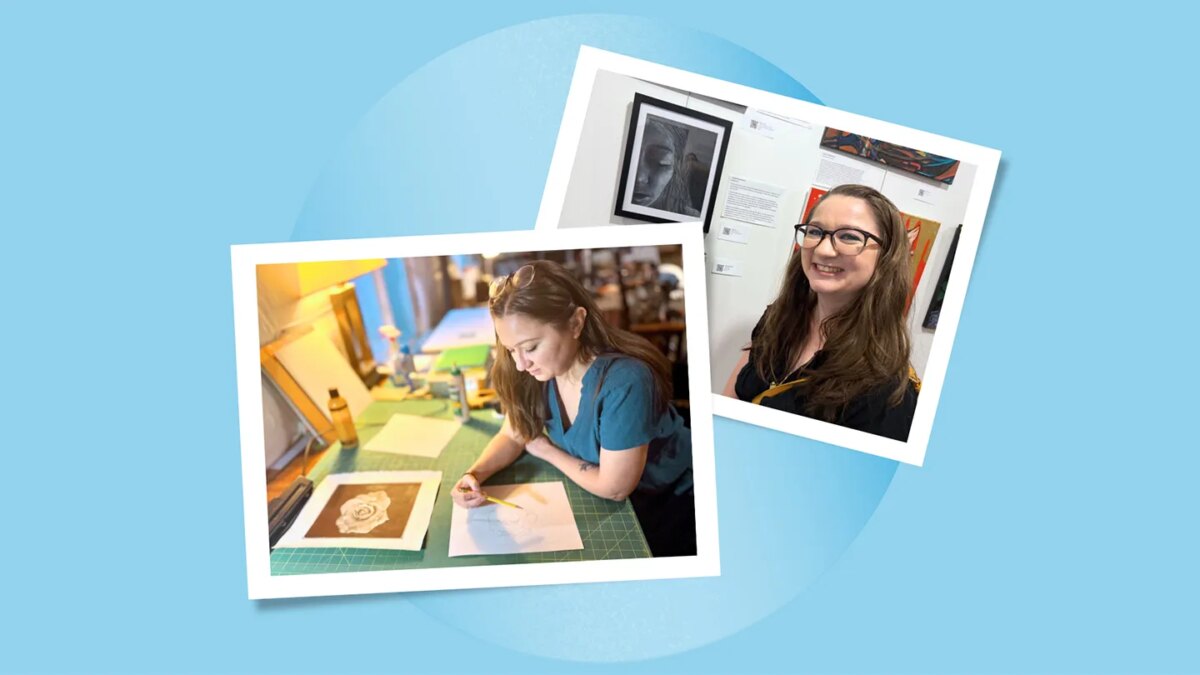
Encouraging people to express pain through art is the core of the nonprofit, says Kimel. The Chronic Pain Project has participants all over the country and world, and is fundraising to start hubs in more cities, she says. The group continues to host exhibitions with workshops afterward. “Because we don’t want this to just be art on the wall; we want conversations to happen,” Kimel says.
This mission is personal for her. “I’ve lived with chronic pain for a long time, but people don’t say those words a lot and talk about what it means for your work life, social life, or self-esteem.” (Kimel has lived with migraine for 40 years and with fibromyalgia for over 20 years.)
Where words fail, creativity provides an outlet, regardless of whether people have no experience or a 40-year artistic career, Kimel says.
Fry says her art portrays what she can’t explain to people. While people generally understand arthritis, she also experiences pain in other ways. “It can be acute and sharp, or a migraine, or sadness, or fatigue,” she says. “When pain is just kind of unidentifiable all over my body or it’s mental pain, that’s indescribable.”
Reclaiming her sense of self has been another important benefit of joining the group, Fry says. Sometimes talking to family members can be hard for someone with chronic pain because they only ask about your illness and your doctor appointments, Fry says. “You wish you had anything else to tell them other than the hardships of your life because it becomes your identity.”
But the Chronic Pain Project allows people to talk about their art, invite loved ones to an exhibition, or share when one of their pieces sells, Fry says. “It’s so cool to see people’s relationships with family and friends become more enjoyable, and to see the person experiencing chronic pain in a more powerful, proud light.”
Fry has also found a sense of community in the group.
Feeling seen in this way is important. “A huge aspect of pain is isolation because it impacts your ability to engage in family activities or regular life,” says Deschamps. “So feeling seen and heard by someone who can understand an accurate depiction of pain shows people, it’s not just me. I’m not alone in this distress.”
“Any medical experience is isolating and vulnerable,” Fry says. “You’re alone in the whole system trying to find answers, not being understood by doctors. So connecting with people, even virtually, who have experienced those things is a profound experience.”
[5]