
Nutrition Labels: What to Look For
If you’re living with type 2 diabetes, here’s what you need to know about how condiments impact blood sugar, what to look for on the label, and expert recommendations about the best sauces and condiments to help you manage your diabetes blood sugar levels.
Read the nutrition facts label for total sugar content (listed under “total carbohydrates”), but even more specifically, look at added sugar, says O’Brien.
“Many foods contain natural sugars, which will be reflected on the food labels, but added sugar is often of greater concern,” she says.
[3]
[4]
There is also a whole host of added sugars with less familiar names such as dextrose, fructose, cane syrup, fruit juice concentrate, inverted sugar, and others, Politi says.Lower total sugars and very low or zero added sugars should be your goal with condiments, says Politi.
Politi also suggests looking for other important label facts on condiments, including:
- Calories per serving size
- Sodium (the lower, the better)
- Total carbohydrates (the lower, the better)
- Dietary fiber (more is better than less)
All of that information is based on serving size. If you eat more, that means you’ll be getting more calories and sugars than what is listed.
Ketchup and BBQ Sauce
Many ketchup brands contain about 4 grams of added sugar per tablespoon, which is a teaspoon’s worth of sugar and is not necessarily excessive, says O’ Brien.
“However, most people use much more than 1 tablespoon of ketchup at a meal. For example, many of the individual condiment containers restaurants provide can contain as much as 4 to 5 tablespoons of ketchup. This is truly a case where portion size matters,” she says.
In the world of condiments, BBQ sauce is often the king of sugar content — and not in a good way, she says.
“That’s because many BBQ sauces traditionally contain honey, brown sugar, or molasses, not to mention the added high fructose corn syrup or other hidden sugars included,” says O’Brien.
She suggests limiting portion sizes, but if you love to slather it on, O’Brien suggests choosing from the wide variety of tasty “no sugar added” BBQ sauces now on the market.
O’Brien cautions that other tomato-based and/or savory sauces, such as sweet chili sauce, teriyaki sauce, and hoisin sauce, can also rank right up there with BBQ sauce in high sugar content.
Mayonnaise
Mayonnaise contains very little to no added sugar, says O’ Brien. Because of that, mayo likely won’t affect blood glucose.
That sounds like good news for people with diabetes, but people trying to manage their weight should still exercise caution with mayonnaise consumption, because of the high fat and calorie content, says Politi.
Salad Dressing
Salad dressings can vary widely in terms of sugar, fat, and calories, so it’s best to read the label, says O’ Brien.
Many dressings, such as ranch, often contain very little to no added sugar, but some French dressings and honey mustard dressing/sauce can be very high in carbs, she says.
And be aware that low-fat and fat-free dressings aren’t always healthier options. These condiments often contain added sugar, says Politi, which could lead to blood glucose spikes.
Naturally Sugar-Free Condiments
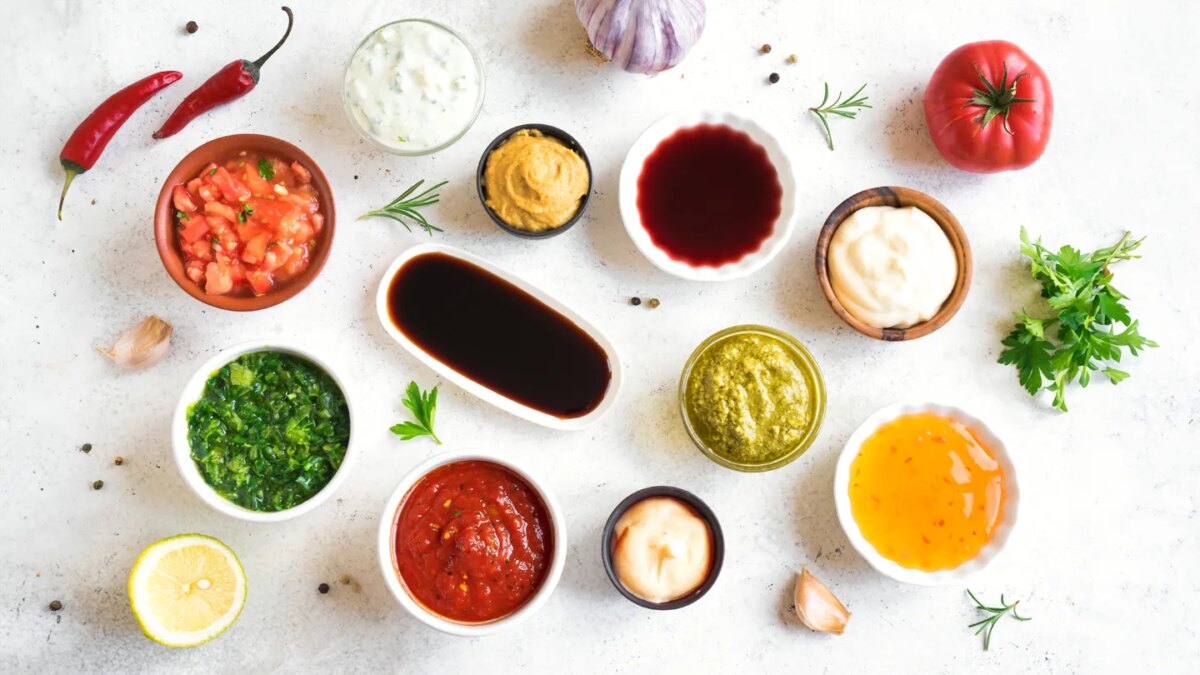
Naturally sugar-free or very low-sugar containing condiments are often a great choice for people looking to add flavor without added sweetener, says O’Brien. She recommends the following:
- Hot sauce
- Yellow mustard
- Soy sauce
- Worcestershire sauce
- Salsa
- Coconut aminos
- Tartar sauce
- Horseradish
- Low-fat, plain Greek yogurt
- Avocado
- Pesto
- Chimichurri sauce
- Vinegar
- Lemon or lime juice
But make sure you check the label, she cautions. “That’s especially important if you are on a diet that restricts sodium because many of those options have a high sodium content.”
Low-sugar options with 4 grams or less in a serving size are okay and unlikely to affect blood glucose on their own, says Politi.